

Why Fragile Packaging Matters
When you ship a glass vase or ceramic mug without proper protection, you're betting against industrial sorting machines, multi-stop transfer hubs, and weather exposure during the busiest months of the year. November and December bring peak-season handling pressure that turns marginal packaging into broken deliveries. Learning how to pack fragile items for shipping is essential to protecting your bottom line. Damage claims for fragile items without adequate packaging typically range from 8 to 12 percent of the shipped value—a cost that lands squarely on your bottom line or customer relationship.
Insurance premiums and replacement shipments add up quickly. A modest investment in bubble wrap, foam inserts, and a double-walled box costs far less than filing a claim, waiting for adjudication, sourcing another item, and paying for expedited re-shipping. Replacement logistics eat time you don't have during holiday deadlines, and customers remember delays more than discounts.
: material selection and strategic placement techniques reduce damage by up to 90 percent.
Protective packaging isn't optional during peak season—it's the most cost-effective defense you have.Understanding how boxes, cushioning materials, and internal spacing work together transforms fragile shipping from a liability into a reliable service you can confidently offer year-round.
How to Pack Fragile Items for Shipping: Box Selection and Specification
Start by matching your package to the right corrugated rating. For fragile items like glassware, ceramics, or electronics, use boxes rated at a minimum of 275 ECT (Edge Crush Test). This rating measures how much stacking force the box can handle before collapsing. Heavier or high-value items benefit from double-wall construction, which adds an extra layer of fluted cardboard between outer liners.
Box size directly affects how well your cushioning materials perform. Too small, and you won't have the recommended two to three inches of padding on all sides. Too large, and the item shifts during transit, absorbing impact forces that protective materials can't dissipate. For example, a 10-inch vase should sit in a box measuring roughly 16 inches tall and 10 inches wide, leaving room for foam or bubble wrap layers without excessive air space.
Carriers offer specific guidance and materials that simplify compliance:
- USPS Priority Mail Flat Rate boxes include optional Fragile labels and are free to order online
- UPS publishes Fragile handling standards in their packaging guidelines, recommending double-walled boxes for items over 10 pounds
- FedEx provides ShippingTools resources that map item types to recommended box construction and cushioning thickness
Pairing the correct box specification with proper protective materials—covered in the next section—reduces damage claims by up to 90 percent. A well-chosen box isn't just a container; it's the foundation of your entire packing strategy. When weight, fragility level, and carrier requirements align with your box choice, you create a protective system that absorbs shocks and keeps contents secure from pickup to delivery.
Protective Materials and Layering
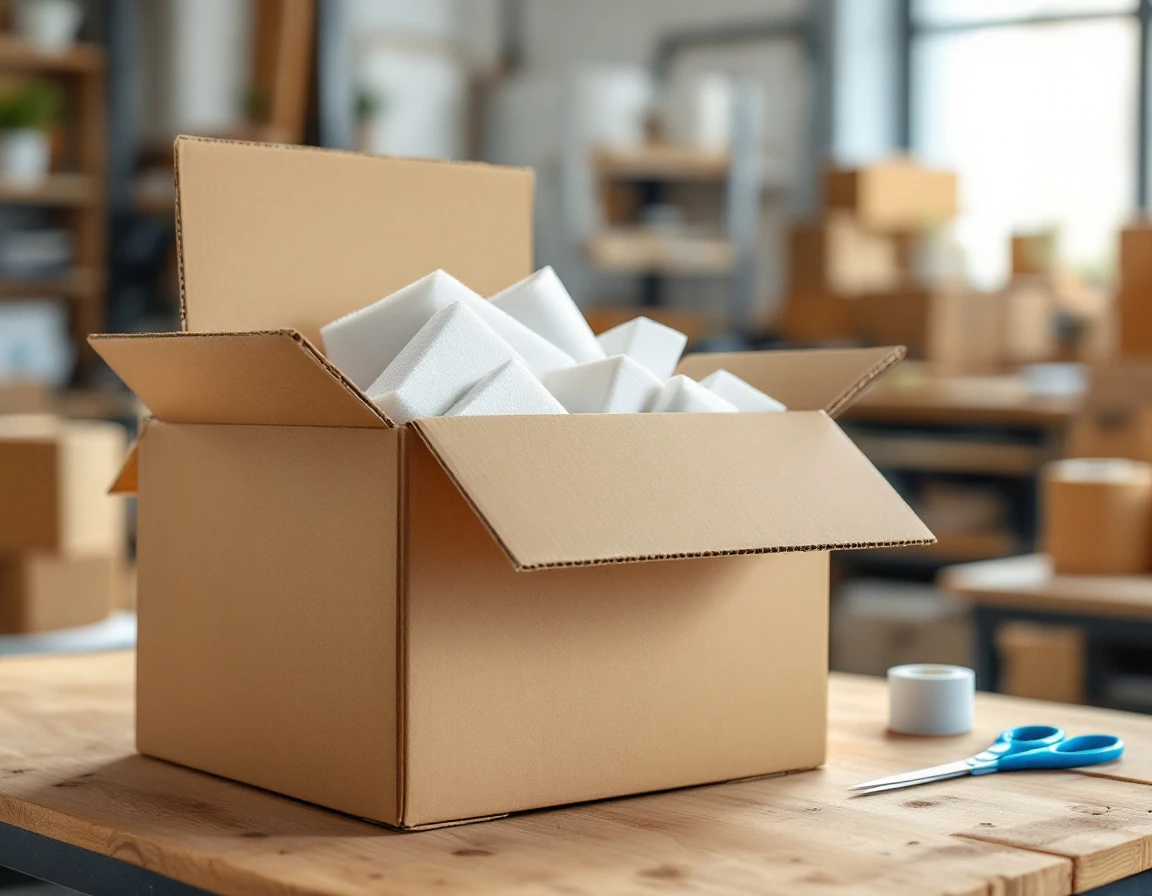
Once you've selected the right box, the five-layer packing sequence becomes your defense against damage. Start with a base cushion layer two to three inches deep using crumpled kraft paper or air pillows. This absorbs bottom impact when carriers stack boxes or drop packages onto conveyor belts. Next, wrap each item individually with bubble wrap for glassware, foam corners for electronics, or kraft paper corners for ceramics—this prevents direct contact with the box walls and other items. Place the wrapped item on the base layer, then fill all voids with air pillows or additional kraft paper so nothing shifts during transit. Movement inside the box creates the collision force that cracks plates and shatters stemware. Finally, add a top cushion layer two to three inches thick to protect against impact from above.
Each layer serves a specific mechanical purpose. The base absorbs vertical shock. The item wrap distributes pressure across the surface rather than concentrating force on a single point. Void fill eliminates the air space that allows acceleration and impact. The top layer guards against crushing when other packages pile on during transport. Skip any one of these layers, and you expose fragile items to the exact forces that generate damage claims.
Material costs stay minimal compared to replacement expenses. Protecting a $50 glassware set requires about $3 to $5 in bubble wrap, kraft paper, and air pillows—less than ten percent of the item's value. If the package arrives damaged, you're facing a $50+ replacement cost, return shipping fees, and the time spent processing a claim or customer complaint. During peak season when carrier networks handle record volume. That damage prevention investment pays for itself many times over. Using best practices for fragile item packaging techniques keeps your customers satisfied year-round.
For businesses concerned about sustainability, eco-friendly alternatives perform just as well. Shredded paper, kraft void fill, and even mushroom-based packing materials provide the cushioning and void fill properties of traditional plastics. The layering principle remains identical—you're still building that five-layer structure to eliminate movement and absorb impact, just with materials that decompose or recycle more easily.

Packing Sequence and Technique
Following the correct wrapping sequence prevents gaps, eliminates rewrapping, and protects your item from the first touch to final delivery. Each step builds on the last to create a protective structure that absorbs shock and keeps your fragile item secure.
- Step 1: Line the bottom of your box with 2–3 inches of cushioning material—crumpled kraft paper or air pillows work well.
- Step 2: Wrap the item individually in tissue paper, then in bubble wrap with bubbles facing inward, securing all edges with kraft tape.
- Step 3: Place the wrapped item in the exact center of the box.
- Step 4: Fill all gaps around the item with air pillows or kraft paper until nothing shifts when you gently shake the box.
- Step 5: Add a 2–3 inch top cushion layer.
- Step 6: Tape all box seams with pressure-sensitive packaging tape—never duct tape, which loses adhesion in cold temperatures.
- Step 7: Reinforce both top and bottom seams with an H-pattern to distribute weight across closures.
Expect to spend 2–3 minutes per package when following this sequence. That brief investment protects your item and prevents costly damage claims during peak holiday shipping.
Labeling and Carrier Coordination
All three major carriers—USPS, UPS, and FedEx—offer fragile handling options and official labels, but only if you explicitly request and pay for them at the counter or online. During the November–December rush, hand-scrawled "Fragile" notes on boxes often go unnoticed in high-speed sorting facilities. Official fragile labels are designed with colors and formats that sorting machines and warehouse handlers recognize instantly.
USPS offers a Fragile label as a low-cost add-on for Priority Mail shipments. UPS provides Fragile Handling service, with pricing that varies based on zone and package weight. FedEx Signature Confirmation pairs well with fragile marking to reduce liability at the doorstep. For valuable items, investing in fragile handling and signature confirmation costs far less than absorbing a damage claim or paying for a replacement shipment during peak seasons.
Signature confirmation also creates a tracking checkpoint that shifts delivery liability from "left on porch" to "handed to recipient," which matters when filing claims. Combine fragile handling with insurance for high-value items. For moderate-value shipments, fragile labels alone often provide enough protection when paired with the five-layer packing sequence covered earlier. The best way to ship fragile gifts combines these carrier services with solid packing fundamentals.
Insurance Decision Framework
Once you've packed your fragile item properly, deciding whether to add insurance depends on three factors: item value, carrier liability limits, and the cost of coverage. A simple three-tier approach helps you balance protection and expense during the holiday shipping rush.
For items valued under $50. Fragile handling plus proper packaging typically covers your damage risk. All major carriers provide baseline liability—USPS offers up to $100 for Priority Mail, while UPS and FedEx standard liability caps at $100—but claims require proof of loss and can take weeks during peak season. If your item is worth less than the deductible and hassle of filing, skip the extra insurance and invest in quality cushioning materials instead.
When shipping items valued between $50 and $150. Add low-cost insurance. USPS charges $2 to $5 for coverage up to $200, while UPS runs $3 to $8 for the same range. Example: an $80 glassware gift costs $7 for fragile handling and $4 for insurance—$11 total to protect against an $80 replacement. That's reasonable peace of mind when holiday delivery timelines are tight. Understanding fragile package shipping insurance options helps you pick the right coverage tier.
For items over $150. Declare the full replacement value and purchase carrier insurance plus signature confirmation. USPS domestic Registered Mail covers up to $5,000, but standard Priority Mail insurance maxes out at $5,000 as well with incremental pricing. UPS and FedEx require declared value forms for amounts exceeding their $100 baseline, with rates scaling based on shipment value and destination.
Avoid underinsuring by declaring replacement cost, not original purchase price.A vintage bowl you paid $20 for ten years ago might cost $120 to replace today. Carriers reimburse based on declared value, so accurate documentation protects you if damage occurs. Keep in mind that claim processing times extend during November and December—proper packaging now prevents delays when replacement arrivals matter most for holiday gifting.

Real Shipping Examples
Seeing how material costs add up against item value helps you decide which protection level makes sense. Here are four scenarios that show packaging choices, carrier options, and total costs for different fragile shipments going out this November.
Glassware Set (Wine Glasses, $60 Value): Use double-wall corrugated outer box with single-wall divider inserts for individual glasses. Wrap each piece in kraft paper, then add air pillows to fill voids. Add FedEx Fragile Handling for signature confirmation. Insurance covers $60 declared value. Total: $2 box + $3 materials + $7 handling + $3 insurance = $15, or 25% of item value. This combination prevents movement and absorbs shock during sorting.
Gaming Console ($350 Value): Place console in anti-static bubble wrap, then position in center of 275 ECT double-wall box with foam corner protectors at all four edges. Fill remaining space with packing peanuts. Ship UPS Ground with full declared value insurance. Total: $3 box + $5 materials + $12 insurance = $20, or 6% of item value. Anti-static wrap prevents electronic damage from friction. This demonstrates shipping fragile items boxes protection in action.
Ceramic Figurine ($80 Value): Wrap base and delicate features separately in kraft paper. Secure with painter's tape, add bubble wrap layer. Use corner cardboard braces inside 200 ECT box, fill voids with crinkle paper. Add USPS Fragile sticker and standard insurance. Total: $2 box + $2 materials + $5 handling + $4 insurance = $13, or 16% of item value.
Collectible Trading Cards ($1,200 Value): Use rigid cardboard mailer with tissue backing to prevent bending. Ship USPS Registered Mail, which includes $5,000 coverage standard and chain-of-custody tracking. Total: $3 mailer + $1 tissue + $18 Registered Mail = $22, or 2% of item value. Registered Mail costs more upfront but eliminates separate insurance fees for high-value flat items.
November Shipping Deadlines and Timing
With December 25 delivery deadlines fast approaching, most carriers set their ground service cutoffs around December 15. USPS Ground, UPS Ground, and FedEx Ground all stop guaranteeing holiday delivery for packages shipped after mid-December—which means you have roughly ten days from early November to finalize your packing and shipping workflow. That window sounds generous until you factor in the time each package actually requires.
Proper packaging takes between two and five minutes per item when you follow the cushion-layer sequence, wrap fragile pieces individually, and reinforce seams with pressure-sensitive tape. During peak season, sorting facilities handle more than 500 million items nationwide, and hand-labeled or poorly packaged parcels are the first to suffer damage under that volume. Rushing through the packing process to meet a deadline increases the risk that boxes arrive crushed, items shift during transit, or claims pile up in late December when you're trying to close out the year.
Shipping one to two days earlier than the official cutoff gives you a buffer if damage does occur—you have time to file claims, inspect returned items, and communicate with customers before the holiday arrives. Starting your packing workflow by November 10 prevents the last-minute scramble that leads to skipped cushion layers, inadequate void fill, and expensive replacements. Investing time in proper packaging now costs less than paying insurance claims or overnight shipping fees to replace damaged goods in December.